TS Digital Network- Only Key to Your Business Success
Search engines have become smarter, but they still need help understanding the exact meaning of your content. This is where Schema Markup plays a crucial role. Schema Markup is a form of structured data that helps search engines interpret your website content more clearly and display richer results in search listings.
In today’s competitive SEO landscape, simply ranking on Google is not enough. You need to stand out, attract clicks, and deliver clarity, and Schema Markup helps you achieve all three.
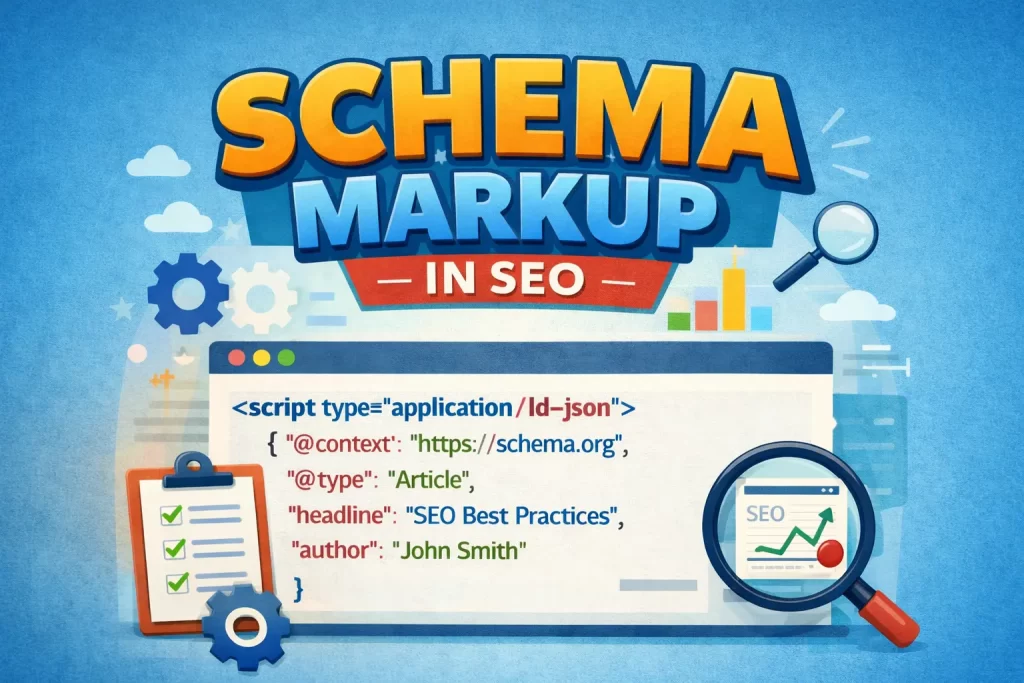
What is Schema Markup in SEO?
Schema Markup is a structured data vocabulary added to a website’s HTML that helps search engines understand the context of your content. It tells search engines what your data means, not just what it says.
For example, Schema Markup can tell Google:
- This is a product
- This is a review with a rating
- This is a business with a location
- This is an FAQ section
Schema Markup is created using a standardized language supported by major search engines like Google, Bing, Yahoo, and Yandex through Schema.org.
Why is Schema Markup Important?
Schema Markup enhances how your pages appear in search engine results by enabling rich snippets. These enhanced listings can include star ratings, prices, FAQs, event dates, and more.
Key Benefits of Schema Markup:
- Improves search result appearance
- Increases click-through rate (CTR)
- Helps search engines understand content better
- Supports voice search optimization
- Enhances local SEO performance
While Schema Markup does not directly improve rankings, it significantly improves visibility and user engagement.
How does Schema Markup work?
Schema Markup works by adding structured data code to your webpage. This code provides additional context about your content, making it easier for search engines to process and categorize.
Search engines then use this data to generate enhanced results like:
- Rich snippets
- Knowledge panels
- Featured FAQs
- Breadcrumbs
- Product details
The clearer your data is, the better search engines can present it to users.
Types of Schema Markup
There are many types of Schema Markup available, depending on your website content.
Organization Schema
Used to define business details like name, logo, contact information, and social profiles.
Local Business Schema
On-Page SEO ensures your content, structure, and keywords work together to rank higher.
Product Schema
Displays product price, availability, reviews, and ratings directly in search results.
Review & Rating Schema
Shows star ratings for products, services, or businesses.
FAQ Schema
Displays frequently asked questions directly in search results.
Article Schema
Used for blogs and news articles to improve visibility in Google Discover and search results.
Event Schema
Highlights event details such as date, location, and ticket availability.
Types of Schema Markup Formats
Schema Markup can be implemented using different formats:
- JSON-LD (Recommended by Google)
- Microdata
- RDFa
Why JSON-LD Is Preferred:
- Easier to implement and maintain
- Cleaner code
- Does not interfere with HTML structure
Most SEO professionals recommend JSON-LD for accuracy and simplicity.
How to Add Schema Markup to a Website?
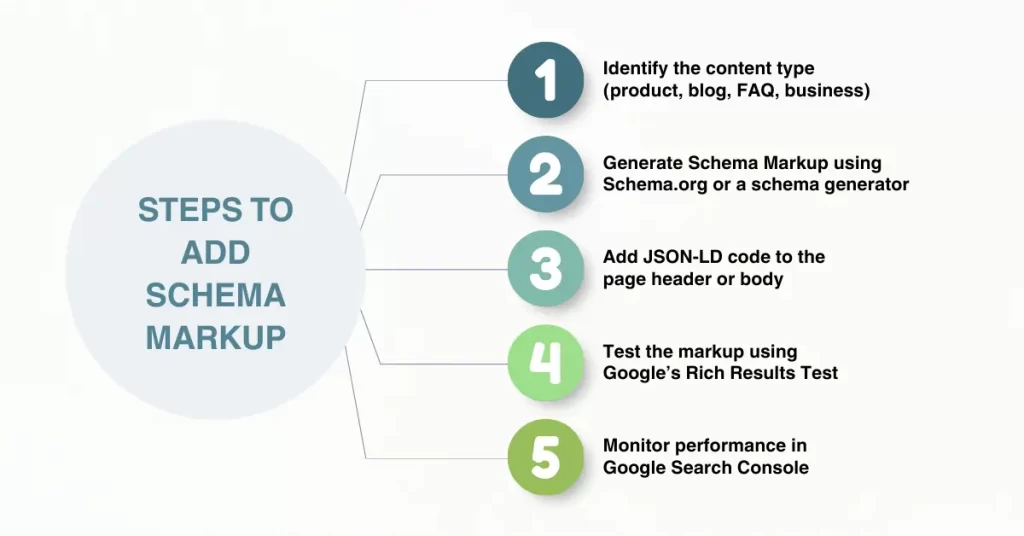
Adding Schema Markup requires careful implementation to avoid errors.
Steps to Add Schema Markup:
- Identify the content type (product, blog, FAQ, business)
- Generate Schema Markup using Schema.org or a schema generator
- Add JSON-LD code to the page header or body
- Test the markup using Google’s Rich Results Test
- Monitor performance in Google Search Console
Proper validation is essential to ensure your schema is eligible for rich results.
Schema Markup and SEO: How They Are Connected?
Schema Markup helps search engines understand content intent, which improves indexing accuracy. While it is not a ranking factor, it influences user behavior by making listings more appealing.
Better presentation leads to:
- Higher CTR
- Lower bounce rate
- Improved user trust
All of these indirectly support stronger SEO performance.
Schema Markup for Voice Search
Voice search relies heavily on structured data. When users ask questions via voice assistants, search engines use Schema Markup to find precise answers.
Using FAQ, How-To, and Local Business schema improves your chances of appearing in voice search results.
Common Mistakes to Avoid in Schema Markup
- Adding incorrect or misleading data
- Using schema that does not match page content
- Not testing schema before deployment
- Overusing schema unnecessarily
- Ignoring Google’s structured data guidelines
Accuracy and relevance are more important than volume.
Author- TS Digital Network
TS Digital Network is a leading Digital Marketing Agency in Delhi, known for its commitment to quality and personalised strategies. Their expert team uses the latest industry trends to help your brand succeed and stand out online. Trust them to provide the right solutions for your business’s growth and success.
Conclusion
Schema Markup is a powerful yet often underutilized SEO tool. It bridges the gap between your content and search engines by providing clear, structured context. From improving visibility and click-through rates to supporting voice search and local SEO, Schema Markup adds long-term value to your digital presence.
If you want your website to stand out in search results and communicate clearly with search engines, implementing Schema Markup is no longer optional, it’s essential. At TS Digital Network, we help businesses implement advanced structured data strategies as part of our result-driven SEO Services in Delhi, ensuring your website not only ranks but also attracts the right audience and higher-quality clicks.
Queries You May Searched About Schema Markup
Schema Markup is used to help search engines understand website content better and display enhanced search results.
Schema Markup is not mandatory, but it improves visibility, CTR, and content clarity, making it highly valuable for SEO.
Schema Markup does not directly affect rankings, but it improves engagement and visibility, which supports SEO performance.
JSON-LD is the best and most recommended format by Google.
Yes, Schema Markup can be added to any website, regardless of platform or industry.
You can use Google’s Rich Results Test or Google Search Console to validate Schema Markup.
Yes, especially Local Business schema, which helps small businesses appear in local search results.